Should parents feel more relieved if they have a daughter?
Why Fewer Girls Are Diagnosed With Autism
Autism Diagnosis in Boys and Girls: What the Data Shows
How Autism Often Presents Differently in Girls – Social Motivation, Language, and Behaviour
Other Common Traits Seen in Girls with Autism
How Diagnostic Tools Can Miss Autism in Girls
Why Fewer Girls Are Diagnosed With Autism
Camouflaging Autism: Masking and Coping Strategies
How Autism Diagnosis in Girls Is Changing
Autism Diagnosis in Boys and Girls: What the Data Shows
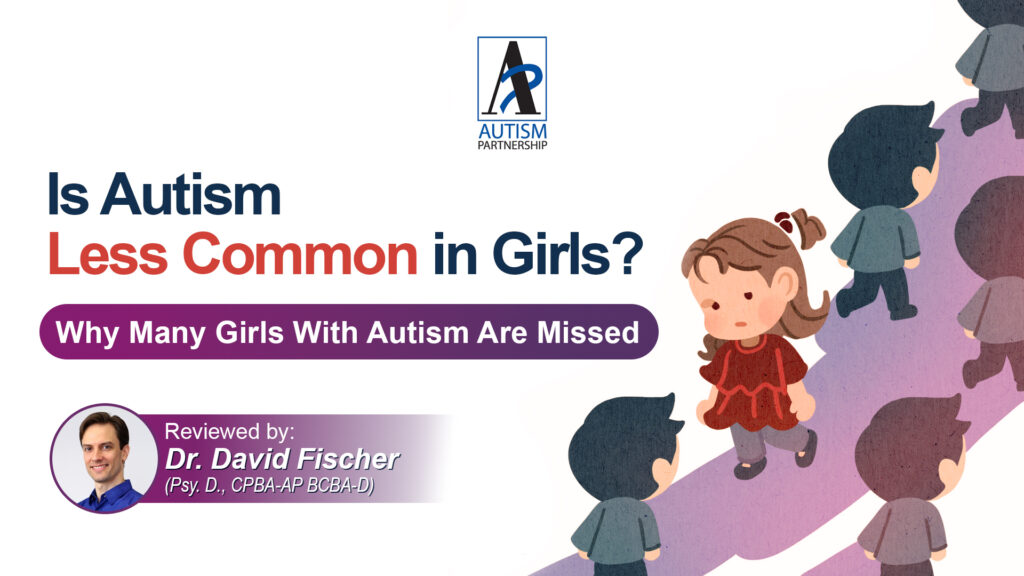
For many decades, autism spectrum disorder (ASD) was thought to be a condition that nearly exclusively affected boys. Over time, the diagnostic ratio has evened out slightly. The Centers for Disease Control and Prevention (CDC) reports that approximately 3.8 boys are diagnosed with autism for every one diagnosed girl. It is now widely accepted that many girls with autism are missed during the diagnostic process, rather than autism being genuinely rare in females.
How Autism Often Presents Differently in Girls - Social Motivation, Language, and Behaviour
Research shows that autism can look different in girls than in boys. Many girls with autism are more socially motivated and may try hard to fit in with others. Their repetitive behaviours and special interests may be less obvious or appear more socially acceptable, making them easier to overlook.
Girls with autism also tend to have fewer clear language delays. Their speech may sound socially appropriate, even if they struggle with understanding social cues or conversations. Instead of acting out, girls are more likely to keep their challenges inside. Daily living skills, such as organisation or independence, may be more difficult. In many cases, these differences do not become clear until around 6 years of age.
Other Common Traits Seen in Girls with Autism
Clinicians have noticed additional patterns that are often seen in girls with autism. Many have a rich imagination and strong interests, which can take up a great deal of their attention. Girls may also find it harder to manage emotions at home, even if they seem calm in public.
Other commonly reported traits include sensitivity to noise, touch, or other sensory input, difficulty with changes in routine, unclear social boundaries, having few close friends, taking language very literally, and higher rates of gender diversity or gender fluidity.
How Diagnostic Tools Can Miss Autism in Girls
An added challenge was described by Burrows et al. (2025). In the general population, females tend to perform better than males on social communication measures. However, current diagnostic tools do not fully adjust for this difference.
This means that girls often need to show more obvious difficulties than boys to receive an autism diagnosis. In addition, girls with autism may show less noticeable differences in eye contact, shared attention, and social approaches, which can further delay identification.
Why Fewer Girls Are Diagnosed With Autism
Several factors contribute to the lower diagnostic rates of autism in girls.
Two key contributors are greater social motivation and more socially acceptable special interests, both of which can reduce the visibility of autistic traits.
Another important reason is that much of autism research and many diagnostic tools were developed based on studies of boys. This has shaped how autism is defined and recognised. In addition, girls are often encouraged—directly or indirectly—to hide or manage their autistic traits.
Camouflaging Autism: Masking and Coping Strategies
Camouflaging refers to efforts to hide autistic traits or use strategies to cope in social situations. This can include masking, such as hiding stimming behaviours, and compensation, such as learning social “rules” or scripts.
Examples of camouflaging include copying peers, using rehearsed conversation styles, pretending to play a social role, closely observing others to guide behaviour, or relying on rigid rules to navigate social situations. While these strategies may help girls fit in, they often require a great deal of effort and constant self-monitoring. Over time, this can be exhausting and may affect self-esteem and sense of identity. It is still unclear whether the long-term benefits outweigh the emotional costs.
How Autism Diagnosis in Girls Is Changing
As highlighted by Burrows et al. (2025), future autism diagnostic tools need to better reflect the ways autism can present in girls. As awareness improves and diagnostic methods evolve, more girls are expected to receive accurate diagnoses.
This change will likely lead to a more balanced gender ratio and higher reported autism prevalence, reflecting better recognition rather than an actual increase in autism.
Not Sure If Your Child Is Showing Early Signs of Autism?
Autism can be subtle, especially in young children. Some children may seem socially engaged but still have underlying challenges. Whether your child is a boy or a girl, looking at patterns over time, rather than one-off behaviours, can be helpful.
Take our 1-minute self-test questionnaire to reflect on your child’s behaviours and see whether there may be an increased developmental risk.
For many parents of young children with autism, their biggest concerns are not necessarily whether their child can recognize letters, count, or keep up academically with other children their age. Sometimes, the questions that weigh most heavily on parents are much more fundamental — and much more closely connected to their child’s future: Will my […]
Autism Spectrum Disorder (ASD) and Attention-Deficit Hyperactivity Disorder (ADHD) are similar disorders, even on a genetic level. Consequently, there can be a lack of clarity when discussing them. This article will attempt to provide some clarity regarding important issues on this topic. To begin with, let’s get a handle on how many children have these […]
Individuals on the autism spectrum vary greatly in how their autistic characteristics shape their life. Some individuals go through their entire life without receiving a diagnosis. On the other hand, some children demonstrate indicators shortly after birth and are diagnosed as young as assessments allow. This article explains how autism has been defined over time—and […]